
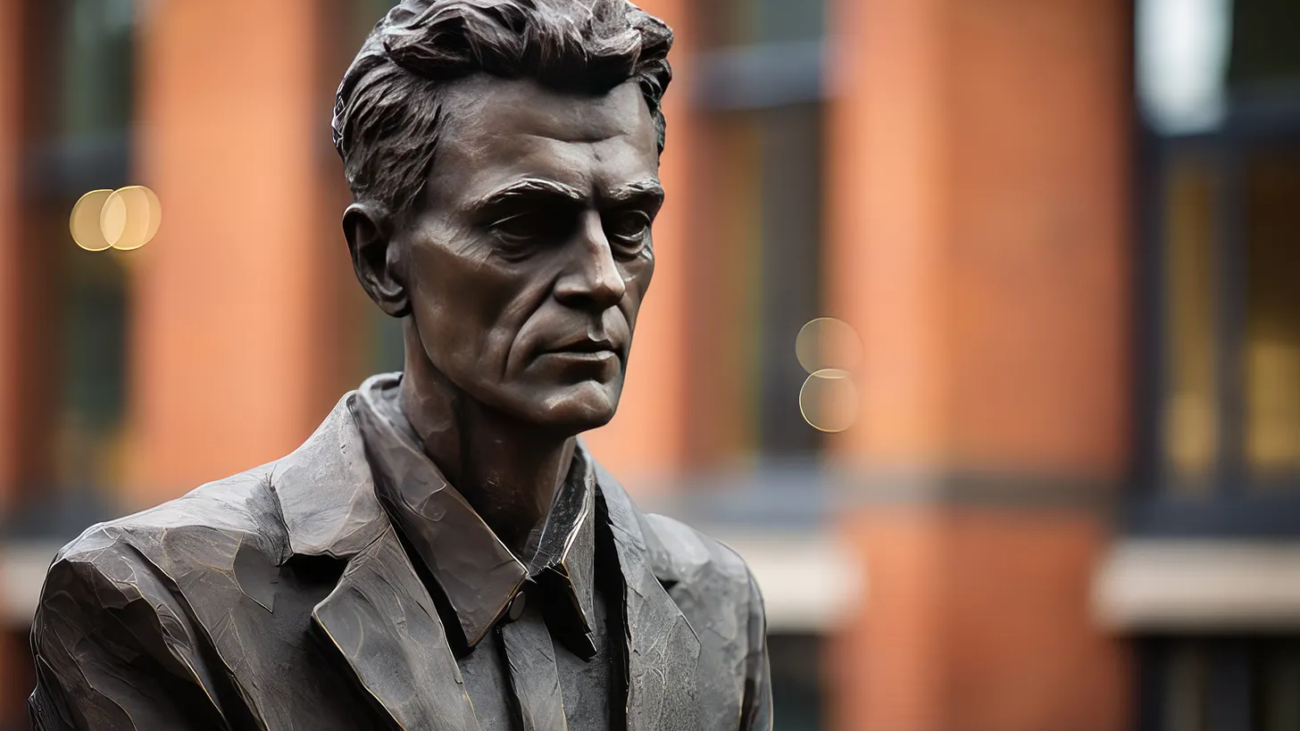
Wittgenstein
Do We Know Our Way About?
We gather in rooms thick with shared concern.
Words echo off the walls — executive function, regulation, burnout.
Spoken with conviction.
Received with nods.
But what if we’ve all stopped knowing what we’re saying?
As minds passionately explore cognition,
Someone asks.
“But what do these words actually mean?”
Dare we ask about someone’s background?
Or identity?
Are we seen as rude?
Or overly technical?
After all, the goal is to promote understanding.
Fairness, or support.
It remains a crucial question.
In fact, it might be the most important one we can ask.
A philosophical problem has the form:
‘I don’t know my way about.’ — Wittgenstein
Wittgenstein said that a philosophical problem begins.
When we don’t know our way about.
That’s where we are now with cognition.
We use words.
Neurodivergent, executive function, or masking.
However, they no longer accurately reflect their underlying mechanisms.
They’re loose, moralised, and saturated with meaning.
And once we stop knowing what we mean.
We stop knowing how to help.
That’s where we are now.
We’ve lost our way.
The very terms meant to support, protect, and include .
Have become so fluid that they obscure as much as they illuminate.
We think we’re describing cognition
But often we’re narrating emotion.
We think we’re identifying causes, but we’re repeating consequences.
We think we’re building systems of care.
But we disagree on the meanings.
Disagree with the words those systems are built on.
I include myself in this.
I’ve used evocative words.
Reclaiming Childhood,
Interostate,
Willowsway.
Because a metaphor can move people to feel and act.
However, I now believe it’s time to pause.
Not to abandon compassion.

Add a Comment
You must be logged in to post a comment